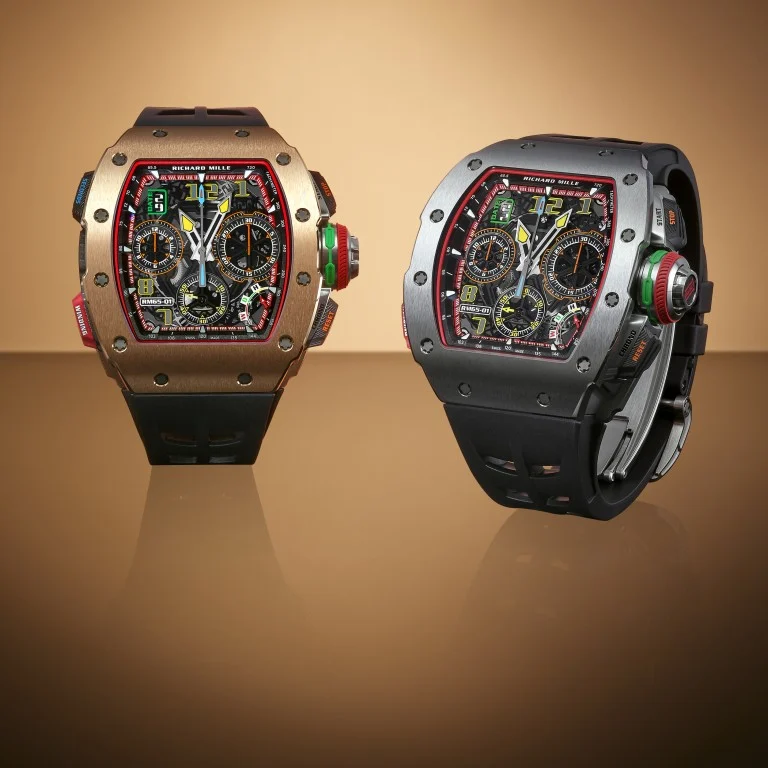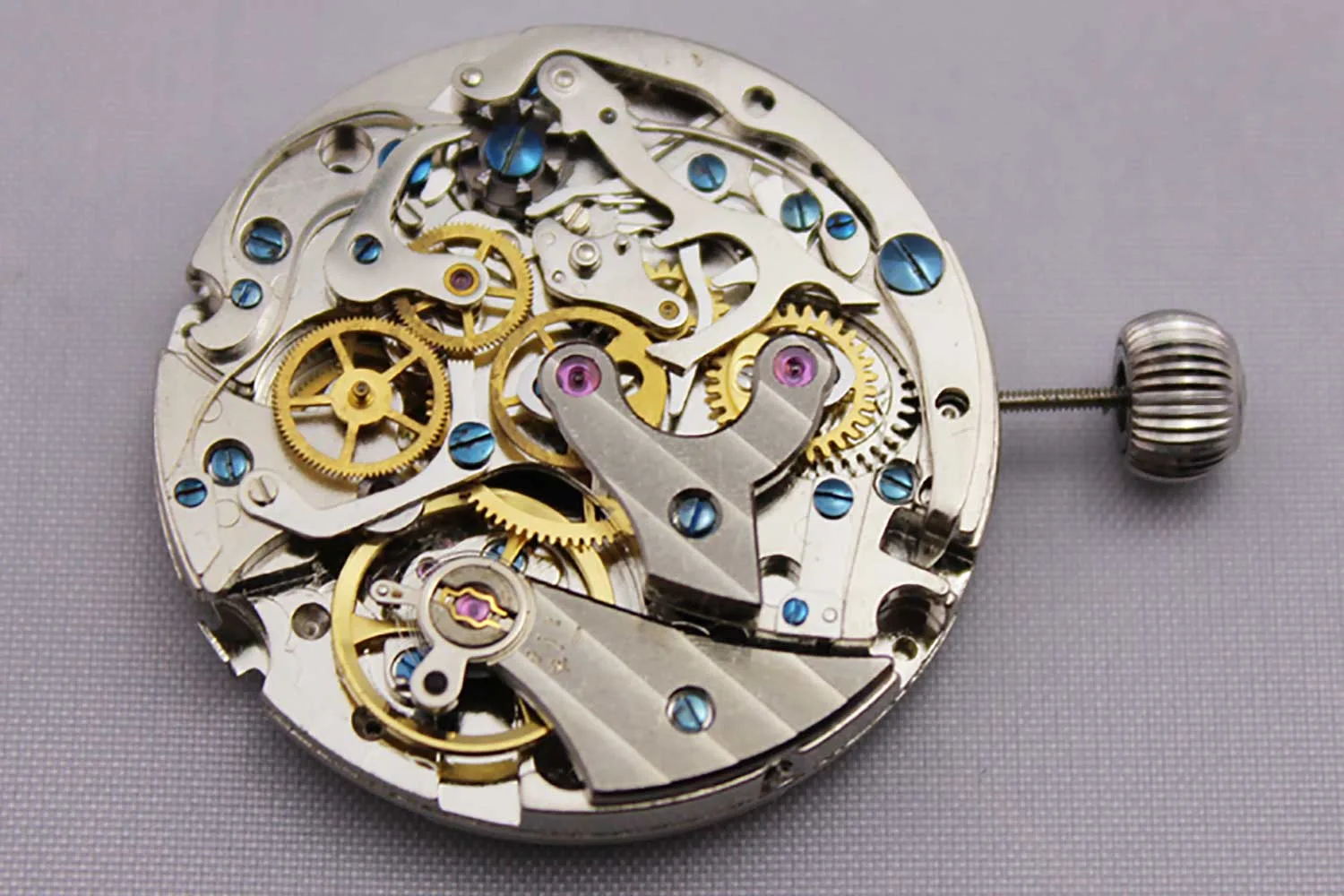
A chronograph movement is one of the most celebrated complications in horology, representing both technical mastery and practical functionality.
Having spent over 50 years studying and handling timepieces, I can confidently say that a chronograph is not merely a watch – it is a sophisticated instrument that allows the wearer to measure elapsed time while simultaneously maintaining standard timekeeping.
Unlike a simple watch, which tells hours, minutes, and seconds, a chronograph integrates an additional timing mechanism, often governed by a series of intricate gears, levers, and cams, all working in harmony with the main movement.
The hallmark of a chronograph is its pushers – typically located at the 2 o’clock and 4 o’clock positions.
The upper pusher starts and stops the timing function, while the lower pusher resets the chronograph hand to zero. In more complex chronographs, you may encounter split-seconds or flyback functions, allowing multiple events to be timed in rapid succession.
The timing information is usually displayed via sub-dials, with separate indicators for elapsed minutes, hours, and sometimes even fractions of a second.
A well-designed chronograph ensures that the stopwatch operates independently, so your normal time display remains uninterrupted—a testament to careful mechanical engineering.
Chronograph movements are broadly categorized into mechanical and quartz.
Mechanical chronographs, whether manual or automatic, are marvels of craftsmanship. The manual-wind variants require careful engagement with the crown, rewarding the wearer with tactile connection to the movement.
Automatic chronographs, on the other hand, utilize a rotor to maintain tension in the mainspring, combining convenience with horological artistry.
Quartz chronographs, though simpler in construction, offer high precision, lower maintenance, and cost efficiency, making them practical choices for everyday use.
It is crucial to differentiate a chronograph from a chronometer.
The chronograph measures elapsed time; the chronometer is a designation of precision, certified by an official authority.
Some watches, of course, embody both qualities, achieving precise timekeeping while offering the versatility of a stopwatch.
A quintessential example is the Omega Speedmaster Professional, famously known as the “Moonwatch.” Its mechanical chronograph movement allowed astronauts to measure critical mission timings on lunar expeditions while maintaining impeccable accuracy.
This watch exemplifies why the chronograph has earned its place as both a functional instrument and an icon of horological excellence.
In my decades of experience, I have observed that a quality chronograph is judged not just by its utility, but by the harmony of its mechanics – how smoothly the pushers engage, how cleanly the sub-dials read, and how reliably the movement performs under real-world conditions. It is a testament to the art and science of watchmaking.