First, a correction the internet often gets wrong: an automatic watch is a mechanical watch. Both run on a mainspring, gear train, balance wheel and escapement, with no battery involved. The only difference is how the mainspring gets wound. A hand-wound (manual) mechanical watch is wound by turning the crown. An automatic adds a rotor and a winding mechanism that tops the mainspring up as your wrist moves.
So the real question is narrower and more interesting: why do so many of the world’s most expensive watches use hand-wound movements, when an automatic technically has more parts? This guide answers that. If you want the full comparison of every movement type, read our automatic vs mechanical vs quartz vs chronograph guide.
The Short Answer
At the entry and mid level, automatics usually cost the same or slightly more than equivalent hand-wound watches, because the self-winding module adds parts and assembly. At the high end, the relationship flips. Hand-wound movements are favoured for thin dress watches, showcase finishing and grand complications, and those are exactly the watches that command the highest prices. The winding method doesn’t create the price; it’s a marker of the kind of watch you’re looking at.
5 Reasons High-End Hand-Wound Watches Cost More
1. Nothing Hides the Movement
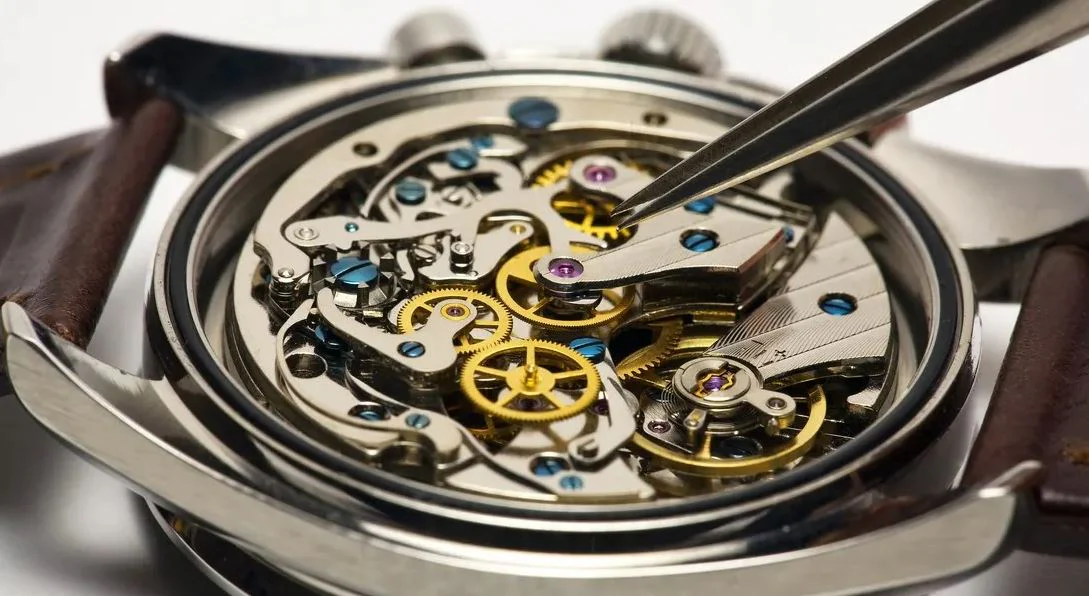
An automatic’s rotor covers a large part of the movement when you look through a display caseback. A hand-wound calibre shows everything: bridges, wheels, jewels and the balance. Brands that build hand-wound watches know buyers will study that view, so they finish every visible surface to the highest standard. That finishing is labour, and labour is the biggest cost in fine watchmaking.
2. Hand Finishing Takes Hundreds of Hours
Côtes de Genève stripes, perlage (circular graining), polished bevelled edges known as anglage, black-polished screws and hand-engraved balance cocks are all done by skilled finishers, often by hand and under magnification. A single bridge can take hours. A watch with this level of finishing simply can’t be mass-produced, and the price reflects that.
3. Thinness Is Hard To Engineer
Removing the rotor and winding module lets watchmakers build extremely thin movements, which is why classic dress watches are so often hand-wound. Making a movement only a couple of millimetres thick that still keeps accurate time and survives daily wear is an engineering challenge. Ultra-thin calibres demand tighter tolerances and more assembly time.
4. Grand Complications Need the Space
Tourbillons, minute repeaters, split-seconds chronographs and perpetual calendars are some of the most complex mechanisms in watchmaking. Many of them are built on hand-wound bases because the space a rotor would take is needed for the complication itself, and because the mechanism stays visible. These complications alone can add lakhs or crores to a watch’s price.
5. Low Volume and Brand Positioning
Manufactures like Patek Philippe and A. Lange & Söhne use hand-wound movements in many of their most celebrated pieces, from classic Calatrava dress watches to the Lange 1. These are produced in small numbers, by the most experienced watchmakers, and positioned as flagships. Low volume and heritage both push prices up. For a broader look at what drives luxury pricing, see why luxury watches are so expensive.
When Automatics Cost More
Below the luxury tier, the logic reverses. An automatic needs a rotor, reversing wheels or pawls, and extra gearing to convert wrist motion into winding. That’s more parts, more assembly and more servicing work. A good example is Hamilton’s Khaki Field range, where the hand-wound Khaki Field Mechanical has typically been priced below its automatic sibling. If two watches share the same brand, finish and quality level, the automatic is often the slightly pricier of the pair.
Price Comparison At A Glance
| Segment | Hand-Wound Mechanical | Automatic |
| Entry level | Fewer options; often slightly cheaper | Wide choice; usually the default |
| Mid range | Similar or slightly cheaper | Similar or slightly pricier (extra winding module) |
| Haute horlogerie | Often the most expensive pieces (finishing, thinness, complications) | Expensive, but rotor hides part of the movement |
Which Should You Buy?
Choose a hand-wound watch if you enjoy the daily ritual of winding, want a slim dress watch, or love seeing a finished movement through the caseback. Choose an automatic if you want convenience: wear it daily and it keeps itself running. Either way, learn the basics of setting the time correctly, and if a watch ever stops, our guide to automatic watches that stopped working walks through the usual causes.
FAQs
Is an automatic watch a mechanical watch?
Yes. Automatic watches are mechanical watches with a self-winding rotor. “Mechanical” in everyday use usually means hand-wound, but technically both are mechanical.
Is a hand-wound watch better than an automatic?
Neither is better overall. Hand-wound movements can be thinner and show more of their finishing. Automatics are more convenient for daily wear.
How often should I wind a hand-wound watch?
Once a day, ideally at the same time, until you feel resistance at the crown. Most hand-wound movements have a power reserve of roughly 40 to 70 hours.
Why are mechanical watches more expensive than quartz?
A mechanical movement has well over a hundred tiny parts that must be made, assembled and regulated by hand or with precision machinery. A quartz movement is battery-powered, largely electronic and far cheaper to produce at scale.
How long do mechanical watches last?
With a service every 4 to 6 years, a well-made hand-wound or automatic watch can last for generations.